

"I saw an ad for progressive lenses starting at 7,990 baht, but the ones I got at your shop cost 30,000 baht. That seems way overpriced — was I scammed?" — I hear this question from customers all the time. I can tell you straight up: you were not scammed. Today I want to explain it simply, using something everyone already understands: buying a car.
"Progressive lenses are just like car trim levels — there's an entry model, a budget model, and a premium model. Every one of them gets you where you're going, but how it feels to drive is a different story."
Quick Summary
A cheap progressive lens and an expensive one both let you see clearly — you're not being scammed. The difference is the same as a cheap car vs. an expensive one: both get you there, but the feel differs in four ways:
- Speed — pricier lenses refocus faster as your eyes shift distance
- Smoothness — pricier lenses feel more comfortable to wear
- Confidence — less dizziness during the first few days of wear
- Usable area — a wider near-vision (reading) zone
You can only really feel these differences by trying the lenses on yourself — which is why Optical X lets customers try 6 lens brands (Tokai, Shamir, Essilor, Zeiss, Nikon, OEM) before deciding, every time.
Imagine Buying a Car — A Yaris and a Camry Are Both Still Cars
Say you're driving a top-spec Toyota Camry worth 2 million baht, and you pass a billboard advertising a Toyota Yaris starting at 700,000 baht. They're both still cars. Both will get you where you're going. But deep down, we all know the two wouldn't feel the same behind the wheel.
Progressive lenses work the same way. Every brand has cheaper and pricier lenses, just like Toyota has everything from the Yaris, Altis, and Camry up to the Crown. A lens starting at 7,990 baht and one priced at 30,000–40,000 baht+ will both let you see through them just fine — the same way a Yaris and a Crown both drive you around. What differs is the detail you feel when you actually use it.
Real Toyota Prices in Thailand, Model by Model — A Visual Comparison
To make this clearer, let's look at real Toyota prices in the Thai market, model by model (approximate figures based on the latest official pricing — subject to change, please check current prices with a Toyota showroom).

Toyota Yaris

Corolla Altis

Camry
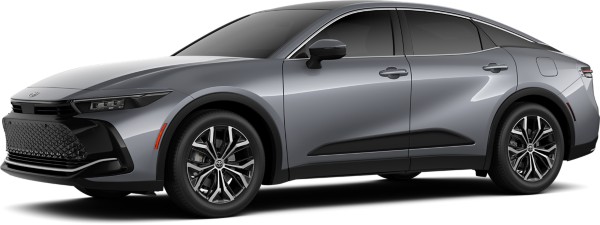
Crown
| Toyota Model | Approx. Starting Price | Comparable Lens Tier |
|---|---|---|
| Yaris | ฿559,000 | Entry (~฿7,990+) |
| Corolla Altis | ฿909,000 | Mid-tier (~low ten-thousands) |
| Camry | ฿1,475,000 | High-tier (~฿20,000+) |
| Crown | ฿3,690,000 | Flagship (~฿40,000+) |
What Actually Differs Between Cheap and Expensive Lenses
Let's put it in a simple comparison table:
| Feeling While in Use | Expensive Car | Expensive Lens |
|---|---|---|
| Speed | Better acceleration | Refocuses faster as your gaze shifts distance |
| Smoothness | Comfortable seats, smooth ride | Feels more comfortable to wear |
| Confidence | Confident cornering, good grip | Less dizziness in the first few days, more relaxed viewing |
| Usable space | Roomier cabin, comfortable seating | Wider near-vision (reading) zone |
But all four of these are very hard to know before you buy, unless you try them yourself.
So Why Do Prices Vary Between Shops Too?
Everything above explains differences in "trim level" within the same brand — a Yaris and a Crown are both still Toyotas. But in real life, customers run into a more complicated question on top of that: "Why does Shop A sell a progressive lens for just 5,000 baht, while Shop B sells something that looks similar for tens of thousands?" That's no longer just a question of trim level — it's more like buying the same car model from two different dealers, where what you actually get back can differ a lot more than you'd think.
"Same model, similar sticker price — but buy it from a showroom with a proper service center versus a lot with no warranty at all, and what you get back isn't the same."
1. Genuine tier differences — part of this really is real, not deception
Shops that sell a genuine entry-tier lens at an accessible price do exist, and that doesn't automatically mean they're ripping customers off — just like a Toyota showroom selling a Yaris at its normal price. Not every cheap shop is something to worry about, but it's worth looking at several other details together.
2. Try-before-you-buy, or a blind purchase from an ad price
As mentioned earlier, most progressive lenses on the market don't come with a try-before-you-buy option. A shop that invests in stocking multiple lens brands for customers to physically try on carries a higher cost than one that sells purely off an ad photo. Buying without trying is a bit like buying a car from a flyer without ever sitting in the seat.
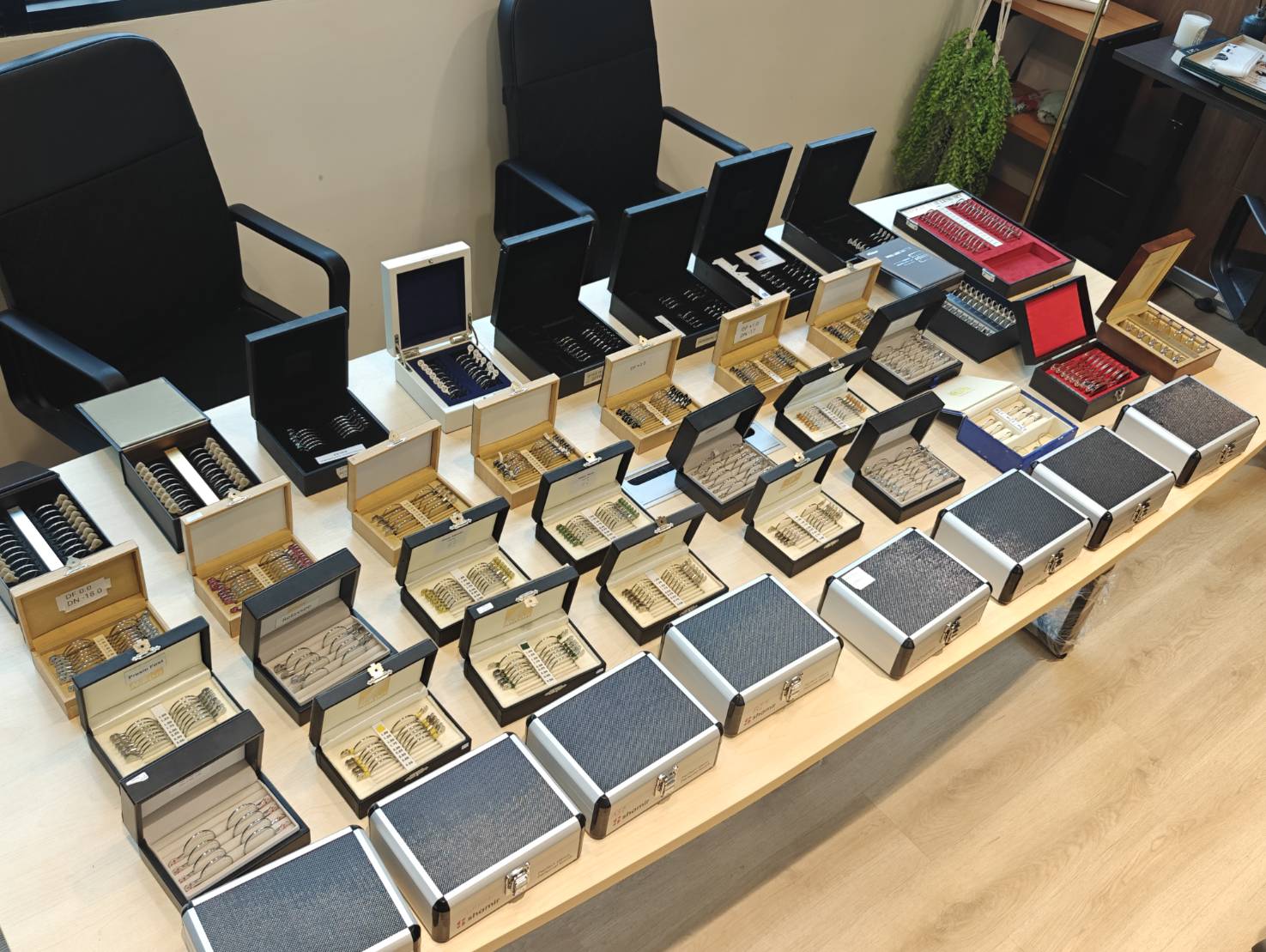
3. What's actually bundled in, not just the lens itself
The price you pay isn't only for the piece of plastic or glass. It also covers how thorough the eye exam is, the quality of the frame it's fitted into, the length and terms of the warranty, post-sale adjustments if the fit isn't right, and the policy on remaking the lens if something goes wrong. At Optical X, for example, every pair comes with a 30-day adjustment warranty after pickup — a hidden cost customers don't see on the price tag, but one that matters the moment something needs fixing.
4. Genuine loss-leader bait pricing vs. a real budget tier
Some shops advertise an unrealistically low price purely to get customers in the door, then upsell to a pricier tier once you're there. The number on the sign may not be what most customers actually end up paying. That's different from a shop that prices its genuine budget-tier lens honestly and delivers exactly the lens advertised, rather than using the price as bait.
5. Hidden overhead — a small unlicensed shop vs. one with qualified optometrists on staff
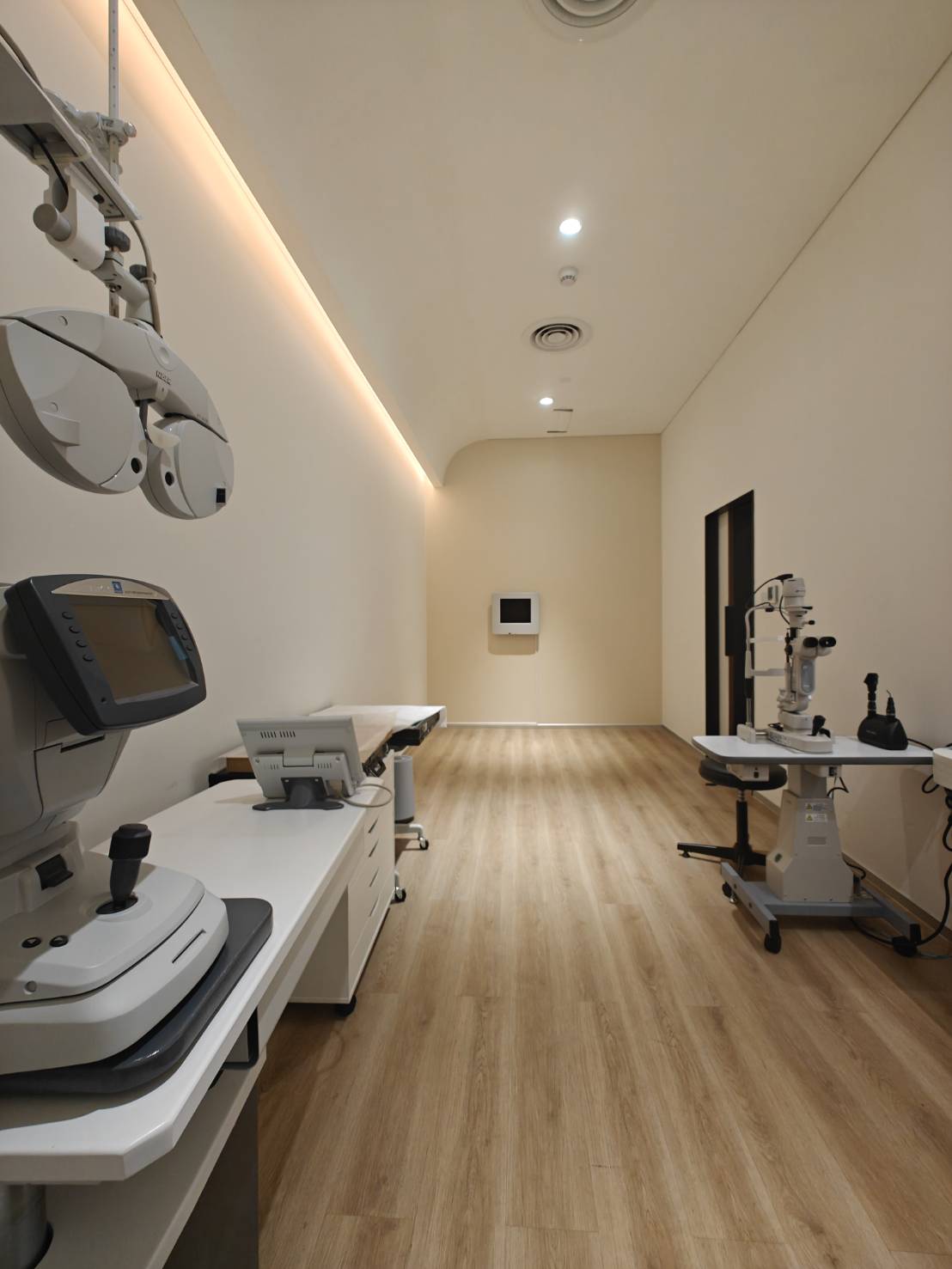
A shop with a licensed optometrist on staff, standard eye-exam equipment, and a trained lens-cutting team carries higher running costs than a small shop with no professional staff. That overhead shows up in the final price too.
A word of caution: If you come across a price that's alarmingly low, it's worth asking whether the lens actually has the refractive index and coatings advertised. The market has seen cases of lenses labeled with a high index but actually made from a lower-index material, or old stock relabeled and resold as new. These are things an average customer can rarely verify by eye alone — choosing a trustworthy shop that's willing to let you try before you buy helps reduce that risk.
To sum it up simply:
| Factor | Higher-priced shops usually offer | Suspiciously cheap shops — watch for |
|---|---|---|
| Try before you buy | Real lenses available to try on | None — you decide from an ad photo |
| Eye exam | Thorough exam by a qualified optometrist | Rushed, or no optometrist on staff |
| Warranty / adjustments | Clear terms and adjustment period | None, or vaguely stated |
| Materials / lens index | Matches what's advertised, traceable | Risk of mislabeling or old materials |
| Staff / licensing | Licensed optometrist on staff | May have no professional staff |
In the end, a cheap price doesn't automatically mean poor quality, and an expensive price doesn't automatically mean good value either. What we'd ask every customer to do before deciding is simple: ask exactly what's included in the price, try the actual lens before ordering, and choose a shop willing to answer every question honestly.
Comparing Lens Brands to Car Brands (Just for Illustration — Not a Ranking)
To make it even easier to picture, imagine Nikon as being like Toyota, while Zeiss and Rodenstock might compare to Mercedes-Benz and BMW, and Hoya might compare to Honda or Nissan — each car brand has its own reputation people commonly talk about. For instance, many people say BMW feels sporty and fun to drive, while Mercedes-Benz feels smooth and comfortable yet solid. (This is just common word-of-mouth in the automotive world, not a scientific test result.)
| Car Brand (Example) | Lens Brand (Visual Comparison) | |
|---|---|---|
 | ≈ |  |
 | ≈ |  |
 | ≈ |  |
  | ≈ |  |
Note: The car logos in this table are used purely for illustration. Optical X has no affiliation with these car brands, and Rodenstock is not a brand sold at Optical X.
The car analogy is just to help you picture the idea more easily. It does not mean one lens brand is better than another. Every well-known lens brand on the market has its own strengths, and the best lens for you is simply the one that fits you best — which you can only find out by trying as many as you can.
A note on this comparison: The car-brand-to-lens-brand comparison in this article is for illustration only, not a ranking or a claim that one lens brand outperforms another. It also doesn't mean Optical X carries every brand mentioned here.
So What Actually Differs Between Each Lens Brand?
Just like people wonder how Toyota, Honda, and Nissan differ, a similar question comes up about lens brands. We've gathered feedback from international optometrists on OptiBoard, a global online community for optometrists and opticians, and summarized the most commonly mentioned strengths for each brand below.
| Brand | Commonly Mentioned Strengths (from OptiBoard feedback) |
|---|---|
| Zeiss | Wide, sharp distance zone with very little edge distortion; especially low return/remake rate |
| Essilor (Varilux) | Wider intermediate zone in higher-tier models without sacrificing distance sharpness; the most widely recognized brand |
| Hoya | Multiple optometrists report it's the easiest to adapt to in the group; wide intermediate-near zone |
| Nikon | Sharp distance vision, relatively low swim effect per some optometrists |
| Shamir | Creative design, good intermediate zone, easy adaptation, good value vs. bigger brands |
| Tokai | Especially soft design, well-suited for high astigmatism, produces thin lenses well |
Zeiss — A point frequently mentioned in international optometrist feedback is a wide, sharp distance zone with almost no edge distortion, along with references to an especially low return-for-correction rate, particularly for the Individual line.
Essilor (Varilux) — Feedback suggests the higher-tier Varilux X offers a wider intermediate zone without sacrificing distance sharpness, and it's the brand optometrists and wearers worldwide are most familiar with, given its long history and large market share.
Hoya — A recurring point across multiple optometrist feedback threads is ease of adaptation. Many note that few patients fail to adapt (non-adapt) to Hoya lenses, and the intermediate-near zone is relatively wide.
Nikon — Some optometrist feedback points to sharp distance vision and relatively low swim effect (image distortion during movement) compared to other designs they've tried, especially in specialty office-use lenses.
Shamir — Frequently mentioned for creative, complex design, with feedback pointing to a good intermediate zone and easy adaptation, especially in the Autograph Intelligence line — and many independent optometrists favor it for offering good value compared to bigger brands.
Tokai — Feedback highlights an especially soft design, reportedly well-suited for patients with high astigmatism, and the ability to produce thin lenses well in high-index materials.
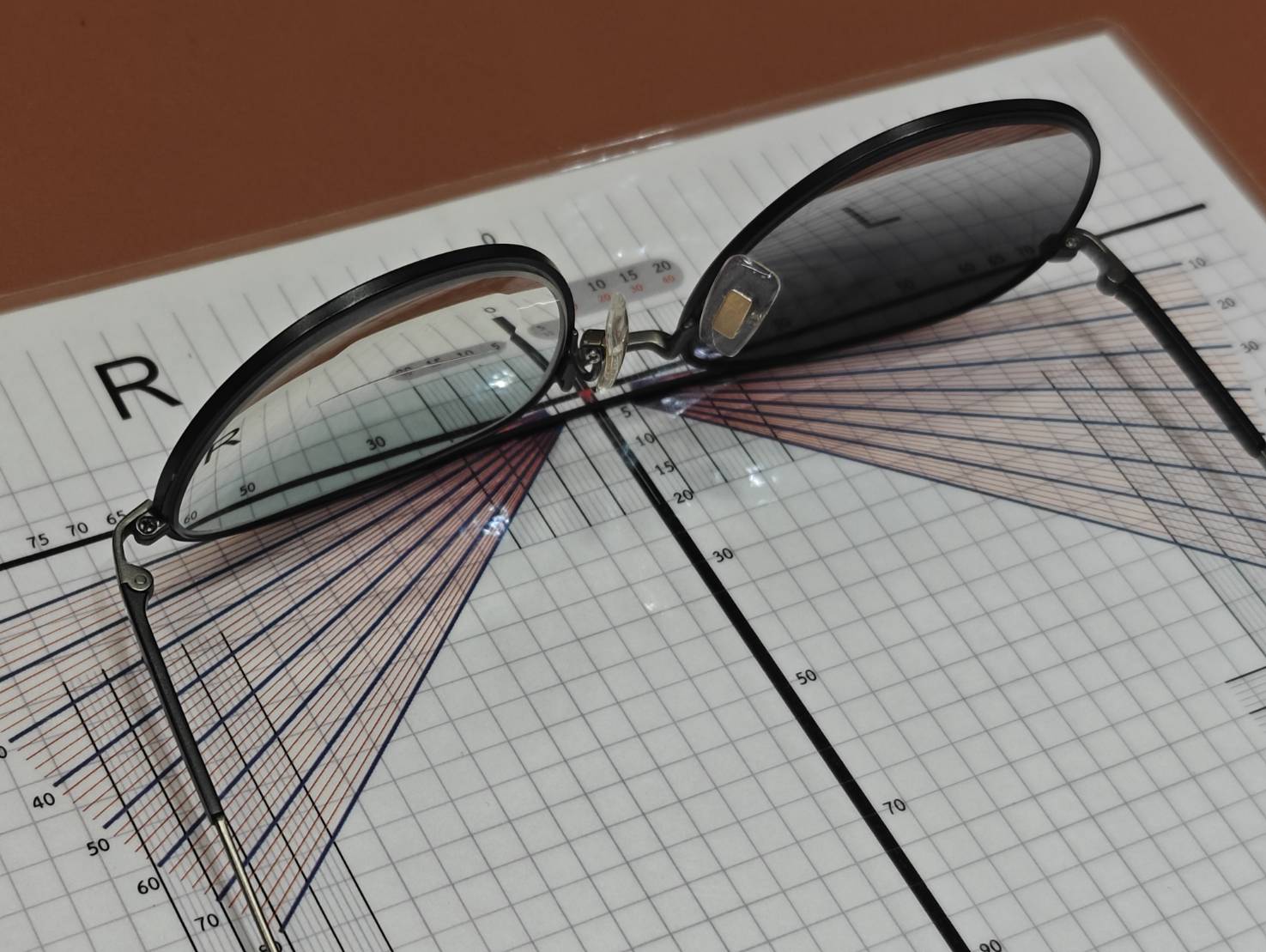
A note on this data: The brand strengths above are a general summary of opinions from international optometrists on OptiBoard, not the result of a scientifically standardized test, and are not drawn from any single specific thread or source. How a lens actually feels depends on each individual's eyes and viewing habits — we always recommend trying lenses in person before deciding.
The Bottleneck of Buying Progressive Lenses — No Try-Before-You-Buy
Even with cars, you get to test drive before deciding. But most progressive lenses on the market don't offer a try-before-you-buy option. Customers never see the real result — they can only imagine whether it'll match the ads. Sometimes a clear lens just looks like a clear lens, since expensive and cheap lenses both look equally transparent.
At Optical X — Try First, Decide Second
Optical X believes customers should get to try lenses before making a real purchase decision. That's why we've worked to bring together progressive lenses from multiple brands for customers to try in-store. We currently offer 6 brands to try: Tokai, Shamir, Essilor, Zeiss, Nikon, and quality budget-friendly OEM lenses.
 Tokai
 Shamir
 EssilorZeissNikon
Customers can try them for real — whichever brand you like, you can choose it, without relying purely on advertising. In the end, the best lens for you is the one you tried and liked, the one that felt comfortable, not necessarily the most expensive or the most heavily advertised.
Ten Articles Still Can't Beat Trying It Yourself
No matter how many reviews you read, none of them can tell you which brand your own brain and eyes will adapt to best, because seeing through progressive lenses is genuinely a personal experience. Buy the lens you tried and liked — that's the Optical X principle.
Another reason mid-to-high-tier lenses tend to be easier to adapt to is a wider comfortable viewing zone and less distortion at the edges, which directly affects the dizziness many people feel in the first few days of wear. If you're wondering why progressive glasses cause dizziness, especially while driving at night, read our in-depth guide (in Thai): "Why Do Progressive Glasses Cause Dizziness, and How Do You Fix It?"
Frequently Asked Questions
Is there a real difference between a progressive lens starting at 7,990 baht and one at 30,000 baht+, or is it just marketing?+
Which lens brand is the best?+
Why does Optical X let customers try lenses before buying?+
What actually differs between an expensive progressive lens and a cheap one?+
How do progressive lens brands like Nikon, Zeiss, Essilor, Hoya, Shamir, and Tokai differ from each other?+
Why do some eyewear shops sell progressive lenses much cheaper than others — some as low as 5,000 baht?+
Is a suspiciously low progressive lens price dangerous? What should I watch out for?+
Want to know which lens brand fits you? Come try them in-store
Try 6 real progressive lens brands, with an eye exam by our expert optometrists.
At Riverside Plaza, 2nd Floor, Bangkok. Open daily 11:00 AM–8:00 PM.