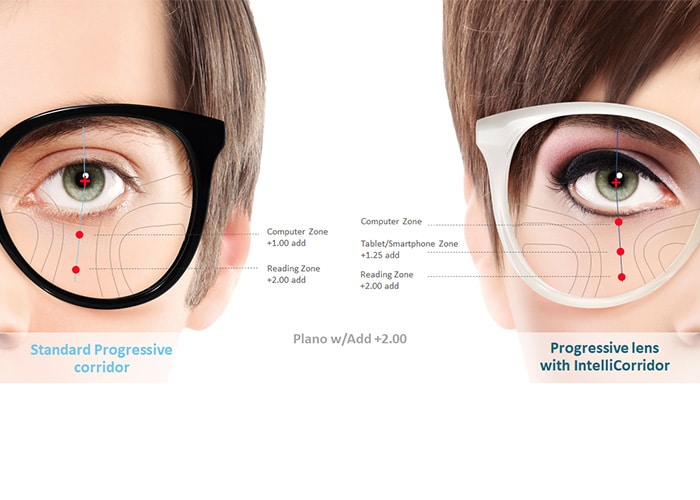


A progressive lens is built to hold a continuously changing prescription within a single piece of glass — the upper portion for distance, the middle for intermediate distances like a computer screen, and the lower portion for close work like reading. To pack all three into one lens, the design needs "transition zones" where the power shifts quickly, and it's precisely in those zones — toward the left and right edges of the lens — that image distortion tends to appear. Every progressive lens on the market has some degree of this; it's an optical trade-off of the design, not a manufacturing flaw, and the amount varies with how well the lens itself is engineered.
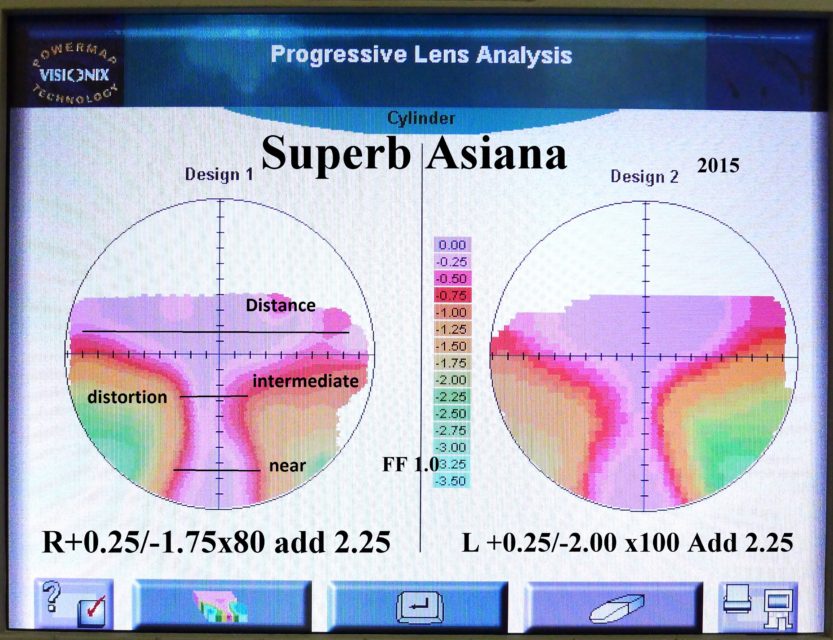
When your eyes naturally scan side to side — without turning your head — your line of sight sweeps through these transition zones without you realizing it. Your brain receives a briefly distorted image while your inner ear and balance system are still reporting that your body is stationary. That mismatch between "what the eyes see" and "what the body feels" is the same basic mechanism behind motion sickness, and it's the main reason new progressive wearers feel dizzy, unsteady, or like the floor is tilted during the first stretch of wearing them.
"A progressive lens doesn't have one single prescription — it has several layered into the same piece of glass. Your brain simply needs time to learn which part of the lens to look through for what you're looking at."
Adjustment-period dizziness is common and usually resolves on its own, but how intense it feels and how long it lasts varies person to person — depending on how much your new prescription differs from your old glasses, how wide the comfortable viewing zone is on the lens tier you chose, and how precisely the frame was fitted to your face. This page is general information, not a medical diagnosis. If you experience severe dizziness, difficulty walking, or ongoing nausea, please see a doctor to rule out other causes as well.