"I feel like 18 again. I didn't know this was possible and I have been using contact lens for my whole life."
— Danny, TanzaniaThe Reading Glasses He Carried Everywhere
Danny had been wearing contact lenses since his thirties. He traveled constantly for work — Dar es Salaam to Nairobi, Nairobi to Dubai, Dubai to Bangkok. Contact lenses were part of his routine: easy, invisible, freeing. They fit his life. And then, somewhere in his late forties, presbyopia arrived.
Presbyopia is not a disease. It is simply what happens to the human eye's lens as it ages — the crystalline lens gradually loses its elasticity and the eye's ability to shift focus between near and far distances weakens. The result, for someone wearing distance contact lenses, is that close-up work — reading a menu, reviewing a contract, checking a phone — becomes blurry. The common solution is a pair of reading glasses worn on top of the contact lenses.
Danny adapted. He started carrying reading glasses. He had three pairs — one in his briefcase, one in his hotel toiletry bag, one at home. He accepted this as simply what middle age looked like: contacts for everything, glasses for reading. It had never occurred to him to ask whether there was another way. His optician in Dar es Salaam had never mentioned one. The opticians in the hotel shopping arcades he passed through in Dubai and Nairobi had never mentioned one either. The reading glasses had become as routine as his passport.

A Question He Had Never Thought to Ask
Danny came into Optical X to replace a pair of contact lenses he had run out of while in Bangkok. It was a practical visit — he expected to be in and out in twenty minutes. During the initial consultation, the optometrist asked him what his current lens was, how he was getting on with near vision, and whether he had been managing with reading glasses.
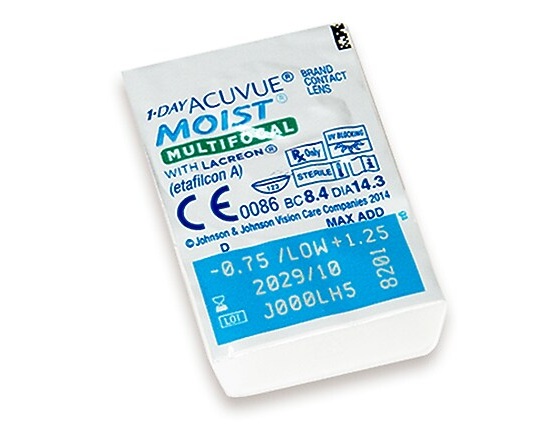
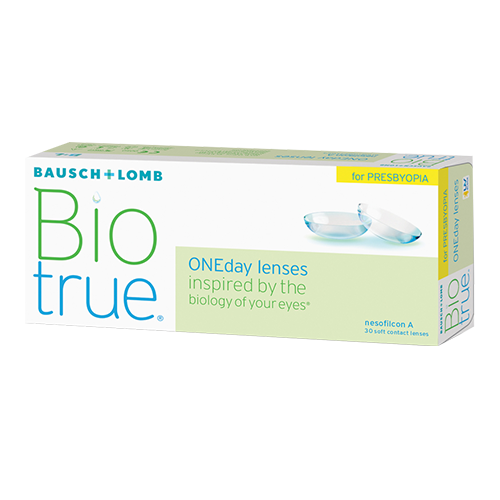
When Danny confirmed the reading glasses routine, the optometrist asked him a simple question: had anyone ever mentioned multifocal contact lenses? Danny had not heard the term before. The optometrist explained: multifocal contact lenses contain multiple prescription zones within a single lens — a distance zone for seeing across the room and a near zone for reading, all built into one thin lens that sits on the eye. The brain learns, over a short adaptation period, to select the right zone depending on what it needs. No reading glasses. No switching. No fumbling for a case at a restaurant table.
Danny was skeptical in the way that people are when something sounds almost too convenient. The optometrist measured his current prescription, assessed his near addition requirement — the additional power needed for reading — and prepared a trial pair. Danny put them in. He read a line of text on a phone. He looked across the room. He looked back down. "I can see everything," he said. The optometrist explained that the full adaptation typically takes a few days of wearing time, but that the immediate trial was already promising.
By the end of the appointment — not a second visit, not a week of waiting — Danny had been fitted with his first pair of multifocal contact lenses. He walked out of the shop without his reading glasses in his shirt pocket for the first time in years.


Multifocal contact lenses are designed for patients with presbyopia who want clear vision at all distances (far and near) without reading glasses. Each lens contains concentric or blended prescription zones — typically a distance zone at the outer edge and a near zone toward the center, or vice versa — that work together as the pupil naturally adjusts to different lighting conditions. The brain learns to automatically select the appropriate zone. Unlike progressive glasses, which can cause distortion and a "floating floor" sensation when worn for the first time, first-time multifocal contact lens wearers may notice a mild shadow vision — but it typically fades once the brain adjusts.
Note: We don't want to give a high expectation, but the sharpness would be roughly 80–90% of glasses.
Fitting requires a trial period and careful assessment of the near addition power, as individual adaptation varies. When fitted correctly, most wearers report a natural, glasses-free experience at all distances within one to two weeks.
- Prescription must not be higher than -9.00D
- Maximum astigmatism should be no higher than -0.50D
- Must already be a regular contact lens wearer
"I Feel Like 18 Again"
The comment Danny made as he was leaving — "I feel like 18 again" — was not a rehearsed testimonial. It was the spontaneous reaction of someone who had spent years managing a workaround that had been entirely unnecessary. The reading glasses he had carried across three continents, the fumbling at dinner tables, the slight embarrassment of pulling glasses out during a business presentation: all of it had been avoidable with a product that had existed for years and that nobody had thought to mention to him.
He left with a supply of multifocal lenses and the parameters for his prescription, so he could order the same product if needed while traveling. He also, notably, did not take his reading glasses with him when he left (he now only carries them as a spare).
Danny's story is not unusual. Presbyopia affects virtually everyone over the age of 40, and the reading-glasses-on-top-of-contacts workaround is genuinely common — not because it is the best solution, but because many patients are never told there is another one. They simply never know that multifocal contact lenses exist.
Multifocal contacts require proper fitting and an adaptation period, but for suitable candidates they offer something no reading glass can: complete freedom of vision without any additional eyewear at all.
If You Wear Contacts and Carry Reading Glasses
If you are a contact lens wearer over 40 who has started reaching for reading glasses, it is worth asking your optometrist whether multifocal contacts are appropriate for your prescription and lifestyle. Not everyone is a candidate — very high additions or certain corneal shapes may limit options — but for a significant proportion of presbyopic contact lens wearers, multifocal lenses represent a substantial improvement in daily quality of life. The question Danny never thought to ask took thirty seconds. The answer changed five years of habit.
Multifocal Contact Lenses: Common Questions
What Changed for Danny
- Eliminated the need to carry reading glasses entirely — fitted in a single appointment
- Learned about a lens category that existed for years and was never mentioned to him
- Clear near and distance vision simultaneously — no switching, no fumbling
- Left Bangkok with his prescription parameters to reorder globally while traveling
- Five years of an unnecessary workaround resolved in one visit